


Clinical Services
University Pathology Laboratory and HKU Cervical Cytology Screening Laboratory
The University Pathology Laboratory and Cervical Cytology Laboratory, accredited by the College of American Pathologists (CAP), was established to provide cutting edge technologies for diagnosis and management of human diseases. The laboratories are dedicated to the continuous improvement of cervical cancer prevention by cytology and HPV tests screening in Hong Kong, with around 2.2 million samples reported since 1991 with an average of 62,463 cases per annum.
The laboratory is a pioneer in the introduction of state-of-the-art technologies.
- In March 2000, a novel liquid-based cytology technology approved by the United States Food and Drug Administration (FDA) was adopted for full-scale cervical cancer screening.
- In 2001, the laboratory became the first in Hong Kong to be accredited by the College of American Pathologists (CAP). The laboratory has since then maintained its CAP accreditation status.
- In 2004, a pilot study on HPV testing for triage of women with atypical squamous cells of undetermined significance (ASCUS) in cervical smears was conducted with the generous support of the SK Yee Medical Foundation. The impressive results of the pilot study encouraged the January 2007 adoption of reflex HPV test for women with cervical cytology diagnosed with ASCUS.
- In July 2005, the laboratory was the first in Hong Kong and Asia to introduce the latest model of automated cervical cytology screening imager approved by the FDA, allowing computer assisted evaluation of cervical smears.
- Various internationally approved HPV assays have been adopted for efficient cervical cancer screening, as standalone test and as co-testing with computer assisted liquid based cytology. To facilitate clinical management of screening algorithms, HPV assays which specifically indicate HPV genotypes 16/18 and extending genotyping are provided.
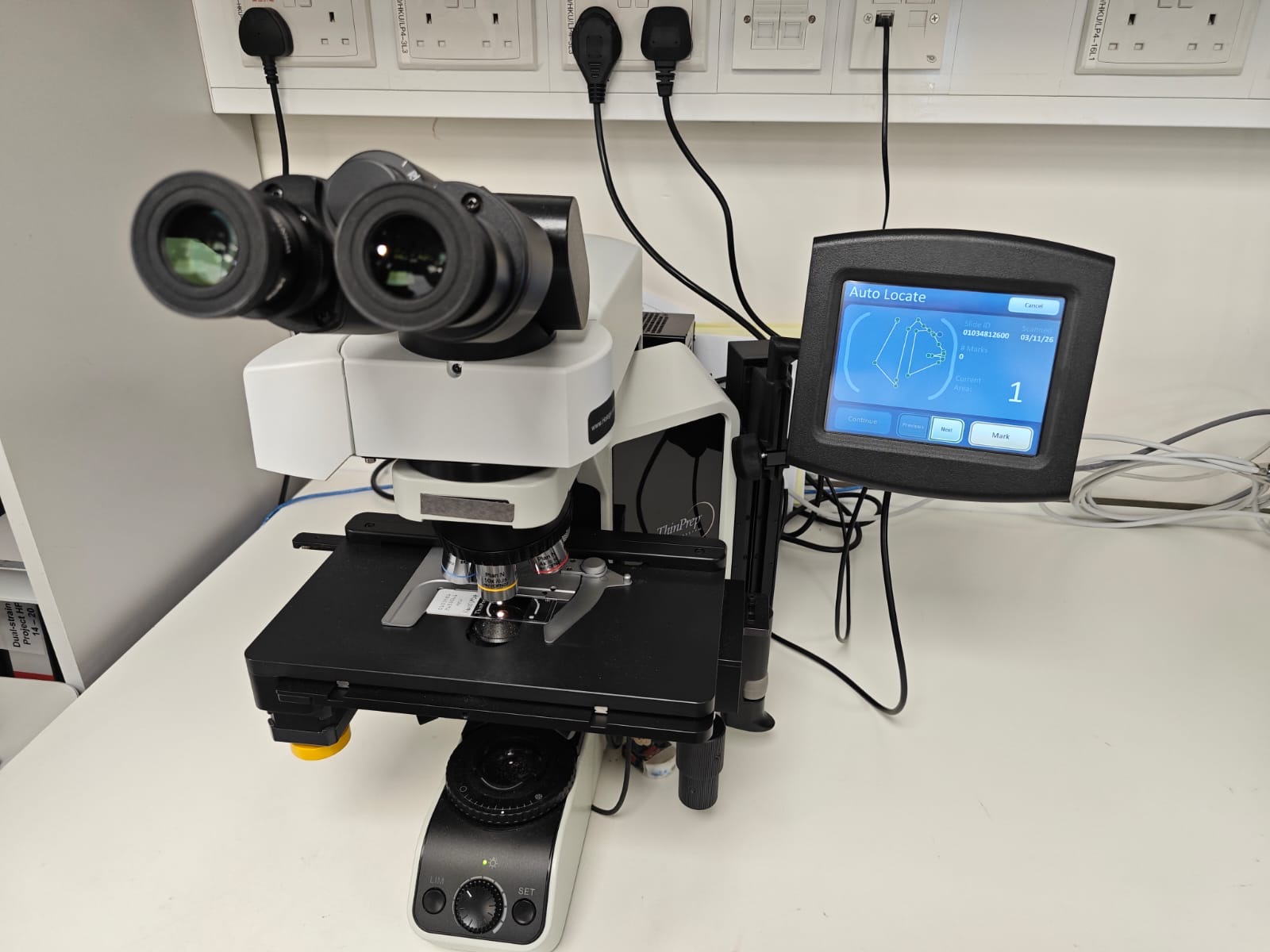
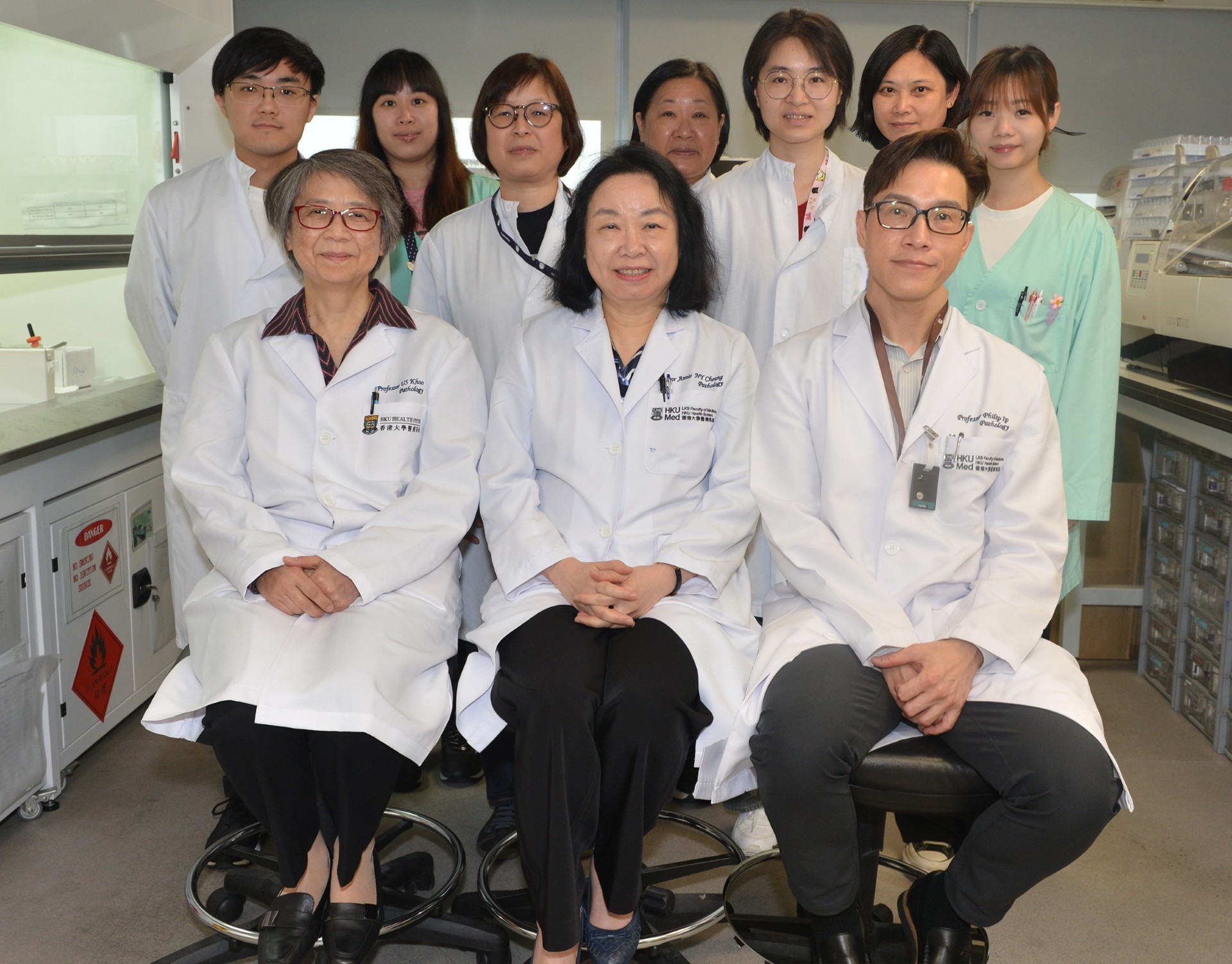
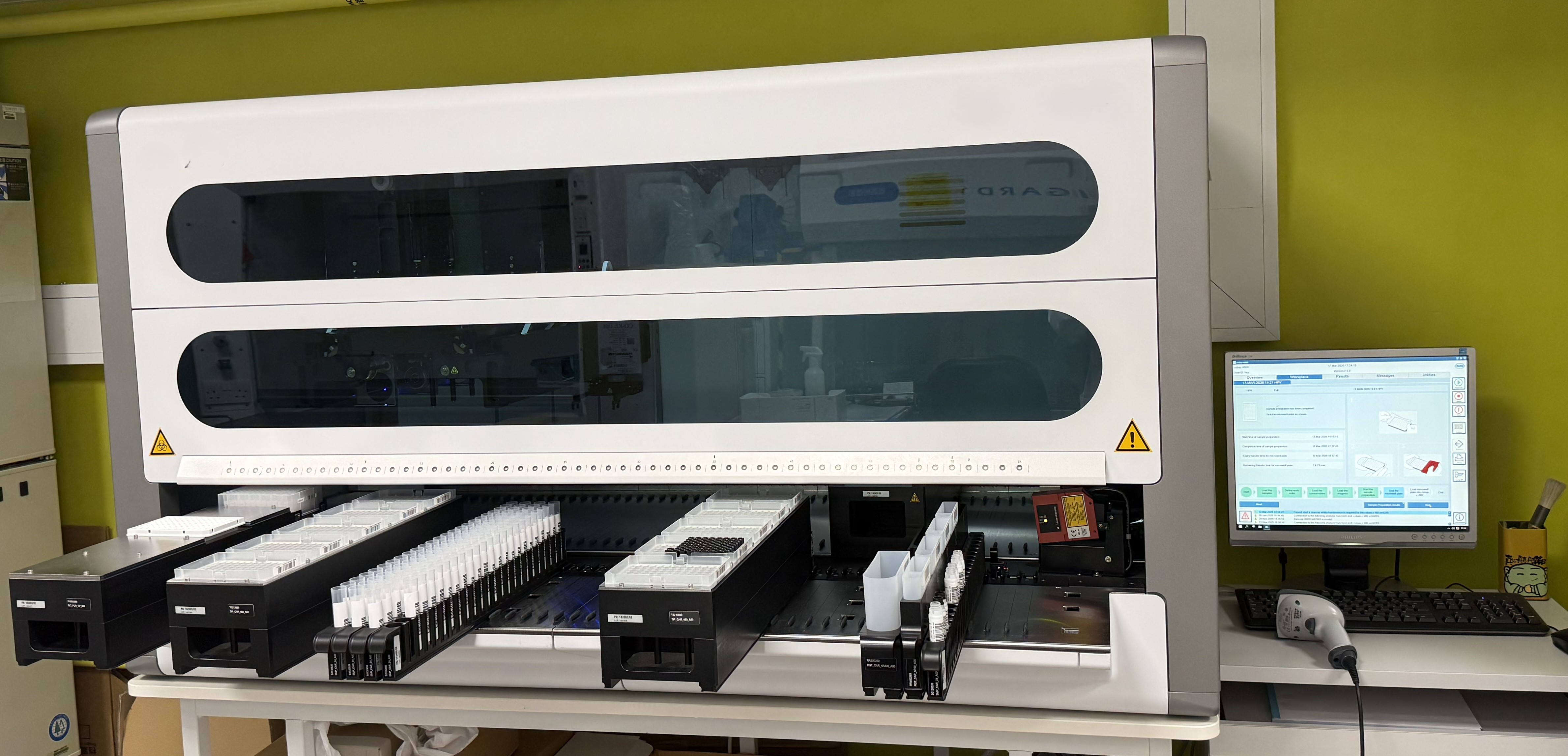

Tissue Processing and Reporting Laboratory
The tissue processing and reporting laboratory provides tissue processing service for surgical biopsy specimens. This includes tissue processing, embedding, microtome-sectioning, and H&E staining. The pathologists on duty would perform macroscopic description, block-sampling of specimens such as cervical loop excision, as well as pathology reporting. Similar services are also available for contract research.Tissue Microarray is the construction of a paraffin embedded block, comprised of multiple tissue elements derived from individual “donor” tissue blocks. It allows cost effective conduction of immunohistochemistry and in-situ hybridization. It can be applied for clinical and translational research including clinical trials.
Hereditary Gastrointestinal Cancer Genetic Diagnosis Laboratory
The Hereditary Gastrointestinal Cancer Genetic Diagnosis Laboratory was established since 1995. We are currently providing genetic tests, genetic counseling, psychosocial support and advice and referral for prophylactic screening for families at risks for the Lynch (also known as Hereditary Nonpolyposis Colorectal Cancer, HNPCC), Familial Adenomatous Polyposis (FAP) and other types of Polyposis syndromes. This is a charitable service supported by the Hong Kong Cancer Fund, aiming to achieve colon cancer prevention in local high risk families through genetic testing and appropriate prophylactic screening. Since 2006, we have gained support from St. Paul’s Hospital that allows us to set up a charitable patient referral centre in their hospital venue to facilitated population-wide patient recruitment. The Laboratory works in collaboration with all public and private doctors in Hong Kong to provide a comprehensive genetic diagnosis service, so as to help them to plan appropriate prophylactic screening for at risk individuals. Over the years, these have resulted in hundreds of polyps or early cancers being removed and thus saving lots of lives. More importantly, with our service, a lot of individuals from these at risk families are proven not inherited the cancer-predisposing mutations, and thus leads in great savings on medical resources and relief of psychological burden. To date, over 1000 families has benefited from our genetic diagnosis service. Amongst these, 263 families were confirmed to carry HNPCC, APC, PJS, JP, PTEN or TP53 gene germline mutations, with predictive genetic testing done for over 1180 family members. The laboratory has generated a large database on mutation spectrum of DNA mismatch repair gene in Chinese population, and uncovered a novel mechanism causing HNPCC through EPCAM gene deletion, the latter has become a standard genetic test worldwide. These have resulted in numerous high profile publications of both local and global importance, in prestigious journals including Nature Genetics and American Journal of Human Genetics. Our laboratory has provided the innovative model for academic researchers to serve the community through partnership with charitable organization, public and private health care providers.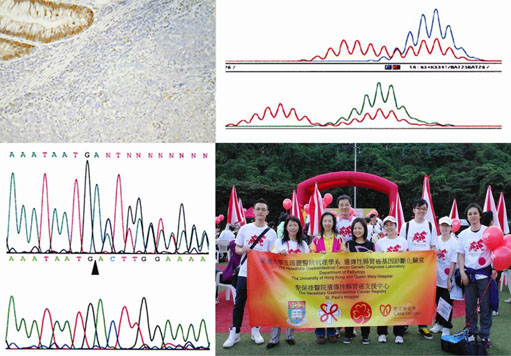

Department of Pathology
-

Room 019, 7/F
Block T, Queen Mary Hospital
Pokfulam Road
Hong Kong
 (+852) 2255 2664
 (+852) 2872 5197
 enquiry@pathology.hku.hk